Paper I — Q1
(a) Structure of gemmules in Porifera and their importance. (10 marks) (b) Structure and functions of parathyroid gland. (10…
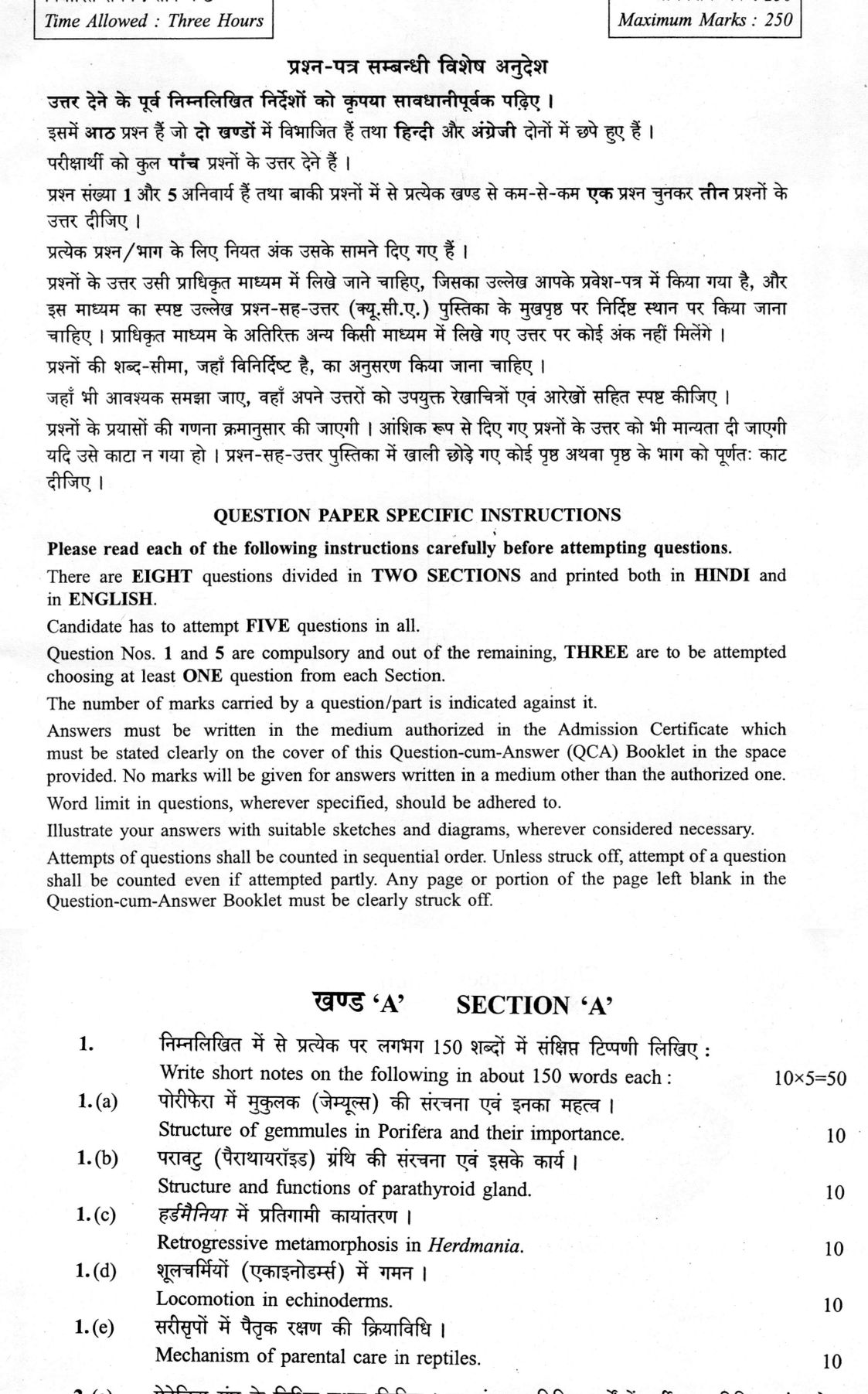
Write short notes on the following in about 150 words each :
Structure of gemmules in Porifera and their importance. 10 marks
Structure and functions of parathyroid gland. 10 marks
Retrogressive metamorphosis in Herdmania. 10 marks
Locomotion in echinoderms. 10 marks
Mechanism of parental care in reptiles. 10 marks
हिंदी में प्रश्न पढ़ें
निम्नलिखित में से प्रत्येक पर लगभग 150 शब्दों में संक्षिप्त टिप्पणी लिखिए :
पोरीफेरा में मुकुलक (जेम्यूल्स) की संरचना एवं इनका महत्व । (10 अंक)
पैरावटु (पैराथायरॉइड) ग्रंथि की संरचना एवं इसके कार्य । (10 अंक)
हर्डमैनिया में प्रतिगामी कायांतरण । (10 अंक)
शूलचर्मियों (एकाइनोडर्म्स) में गमन । (10 अंक)
सरीसृपों में पैतृक रक्षण की क्रियाविधि । (10 अंक)
Model answer
Drafted with AI by UPSC Answer Check against this question's marking rubric, to the 150-word length. UPSC does not publish answers for Mains — this is one way to score well, not an official key. How we build rubrics and answers.
(a) Gemmules in Porifera: structure and importance (10 marks)
Structure. A gemmule is an internal bud of freshwater sponges such as Spongilla and Ephydatia, and of a few marine ones. It is a spherical mass of undifferentiated archaeocytes (thesocytes) packed with reserve food. This is enclosed in a tough coat, made of an inner layer of spongin, a middle pneumatic layer with amphidisc spicules (gemmoscleres) set radially, and an outer spongin layer. A small opening, the micropyle (foramen), lets the cells emerge.
Importance.
- Survival: it withstands drought, freezing and other adverse seasons, when the parent sponge dies and disintegrates.
- Asexual reproduction: with the return of good conditions the archaeocytes emerge through the micropyle and grow into a new sponge.
- Dispersal: gemmules are carried by water, wind and animals.
- Taxonomy: the shape of the amphidiscs is a diagnostic character in classification.
- Experimental value: they are used to study development and cell differentiation.
(b) Parathyroid gland: structure and functions (10 marks)
Structure. There are usually four small, oval glands, in two pairs, embedded in the posterior surface of the two thyroid lobes. They arise from the endoderm of the third (inferior gland) and fourth (superior gland) pharyngeal pouches. Each gland has a thin capsule and a rich blood supply. Histologically it contains chief (principal) cells, which secrete the hormone, and fewer, larger oxyphil cells.
Functions. The chief cells secrete parathyroid hormone (PTH), which raises blood calcium.
- Bone: PTH stimulates osteoclasts to resorb bone and release calcium.
- Kidney: it increases the reabsorption of calcium, and the excretion of phosphate, and activates vitamin D to calcitriol.
- Gut: calcitriol increases the absorption of calcium.
Low blood calcium stimulates secretion, and high calcium suppresses it, by negative feedback. Calcitonin opposes PTH. Hyposecretion causes hypocalcaemic tetany, and hypersecretion causes bone decalcification (osteitis fibrosa cystica) and kidney stones.
(c) Retrogressive metamorphosis in Herdmania (10 marks)
Herdmania is a sessile tunicate whose development is called retrogressive because a more advanced larva changes into a less advanced adult.
Larva. The free-swimming, non-feeding tadpole larva shows the chordate characters: a notochord in the tail, a dorsal hollow nerve cord with a brain vesicle containing an otolith and an eye spot, pharyngeal gill slits and a post-anal tail. It lives for a few hours.
Changes.
- Loss: the tail and its notochord are absorbed, the nerve cord shrinks to a single dorsal ganglion, and the sense organs are lost.
- Gain: the larva attaches to a substratum by adhesive papillae, the pharynx grows with many gill slits, atrial and buccal siphons form, and a tunic is secreted, giving a sessile, filter-feeding adult.
Significance. It reveals the chordate affinities of the tunicates and supports the view that vertebrates arose from a larval, tadpole-like ancestor.
(d) Locomotion in echinoderms (10 marks)
Basic mechanism. Movement is by the water-vascular system: seawater enters through the madreporite and passes through the stone canal, ring canal and radial canals to the lateral canals and the tube feet, each with an ampulla. When the ampulla contracts, water is forced into the tube foot, which extends. Its sucker grips the surface, then longitudinal muscles shorten the foot and pull the body forward. Many feet act in a coordinated way.
Class variants.
- Asteroidea (Asterias): tube feet with suckers on the arms, and a leading arm.
- Ophiuroidea (Ophiura): serpentine movement of the flexible arms, and tube feet without suckers.
- Echinoidea (Echinus): spines and tube feet together, and burrowing by spines in sand dollars.
- Holothuroidea (Holothuria): tube feet on the ventral surface, together with body contractions; some burrow.
- Crinoidea (Antedon): feather stars crawl or swim with the arms, whereas sea lilies are sessile.
(e) Parental care in reptiles (10 marks)
Parental care raises the survival of eggs and young.
- Nest making: sea turtles (Chelonia) dig a pit on the beach and cover the eggs, and female crocodilians (Crocodylus) build a mound of vegetation.
- Guarding: female crocodiles and the king cobra (Ophiophagus hannah), which builds a nest of leaves, guard the nest.
- Brooding: the female python (Python molurus) coils round the eggs and shivers, raising the temperature (thermogenesis).
- Young: the mother crocodile opens the nest in response to the calls of the hatchlings and carries them in her mouth to water.
- Viviparity: the eggs are retained inside the mother, as in garter snakes, sea snakes, many lizards and some skinks (Mabuya), which protects the young, and is an adaptation in cold climates.
How this answer will be evaluated
Evaluation rubric
Each sub-part is marked on its own, against the marks and word limit printed on the paper.
- (a) Write a short note on the structure of gemmules in Porifera and their importance (10 marks, about 150 words). 10 marks · 150 words
Must cover
- Structure: mass of archaeocytes with reserve food, enclosed by a coat with a pneumatic layer of amphidisc spicules
- Micropyle as the exit for the cells
- Importance: survival in adverse seasons, asexual reproduction, dispersal
- Taxonomic and experimental value
Loses marks
- Describing sexual reproduction only.
- Omitting the importance half.
Earns more
- Named freshwater sponge such as Spongilla.
- Both structure and importance covered.
Extra mark
- Contrast with marine sponges, which lack gemmules in most cases
- (b) Write a short note on the structure and functions of the parathyroid gland (10 marks, about 150 words). 10 marks · 150 words
Must cover
- Structure: four small glands behind the thyroid, from third and fourth pharyngeal pouches, chief and oxyphil cells
- PTH raises blood calcium by acting on bone, kidney and gut
- Regulation by blood calcium through negative feedback, with calcitonin as antagonist
- Hypo- and hypersecretion effects
Loses marks
- Confusing PTH with calcitonin.
- Placing the glands in the neck away from the thyroid without mention of it.
Earns more
- Role of vitamin D activation.
- Correct origin and cell types.
Extra mark
- Osteitis fibrosa cystica and tetany named
- (c) Write a short note on retrogressive metamorphosis in Herdmania (10 marks, about 150 words). 10 marks · 150 words
Must cover
- Tadpole larva with notochord, nerve cord, gill slits and tail
- Changes lost: tail, notochord, nerve cord and sense organs
- Changes gained: attachment, siphons, tunic, enlarged pharynx and gill slits
- Significance for chordate affinity and the origin of vertebrates
Loses marks
- Describing metamorphosis of a frog.
- No chordate characters of the larva.
Earns more
- Explanation of why the change is called retrogressive.
- Adhesive papillae in attachment.
Extra mark
- Garstang's paedomorphosis idea
- (d) Write a short note on locomotion in echinoderms (10 marks, about 150 words). 10 marks · 150 words
Must cover
- Water-vascular system path: madreporite to tube feet
- Tube-foot mechanism with ampulla, sucker and muscles
- Class-wise variants for Asteroidea, Ophiuroidea, Echinoidea, Holothuroidea, Crinoidea
- Named examples
Loses marks
- Describing only starfish.
- Omitting the ampulla.
Earns more
- Coordination of many tube feet.
- Role of spines in sea urchins.
Extra mark
- Burrowing habit in some holothurians
- (e) Write a short note on the mechanism of parental care in reptiles (10 marks, about 150 words). 10 marks · 150 words
Must cover
- Nest making in turtles and crocodilians
- Guarding and brooding, as in the python and the king cobra
- Care of young, such as carrying hatchlings
- Viviparity and its adaptive significance
Loses marks
- Naming birds or mammals as reptiles.
- No named examples.
Earns more
- Named species for each device.
- Adaptive value stated.
Extra mark
- Temperature-dependent sex determination as a nest-site consequence
What "Write short notes" is asking you to do
Five or six self-contained answers, marked separately, typically 10 marks and about 150 words each. Each note must carry its own definition, its two or three defining features and a line on why it matters; a common introduction or conclusion across the notes earns nothing.
Structure that answers it
Per note: one-line definition or identification → two or three features, mechanisms or named examples → one line of significance or Indian application
Where marks are lost
Writing the first two notes at essay length and rationing the rest. Each note is marked on its own, so marks surrendered on a compressed or unattempted note cannot be won back by the long ones.
Practice this exact question
Write your answer and it is marked point by point against the model answer above — what you covered, what you missed, what you got wrong.
Evaluate my answer →More from Zoology 2026 Paper I
- Q1 Write short notes on the following in about 150 words each : (a) Structure of gemmules in…
- Q2 (a) Write peculiar characters of phylum Annelida. Classify this phylum into different cla…
- Q3 (a) Give a comparative account of aortic arches in vertebrates. (20 marks) (b) Explain di…
- Q4 (a) Explain types of fins in fishes and their role in locomotion. (20 marks) (b) Describe…