Paper II — Q4
(a) Give a detailed account of the impact of water, air and soil pollution on animal health and production. (20 marks) (b)…
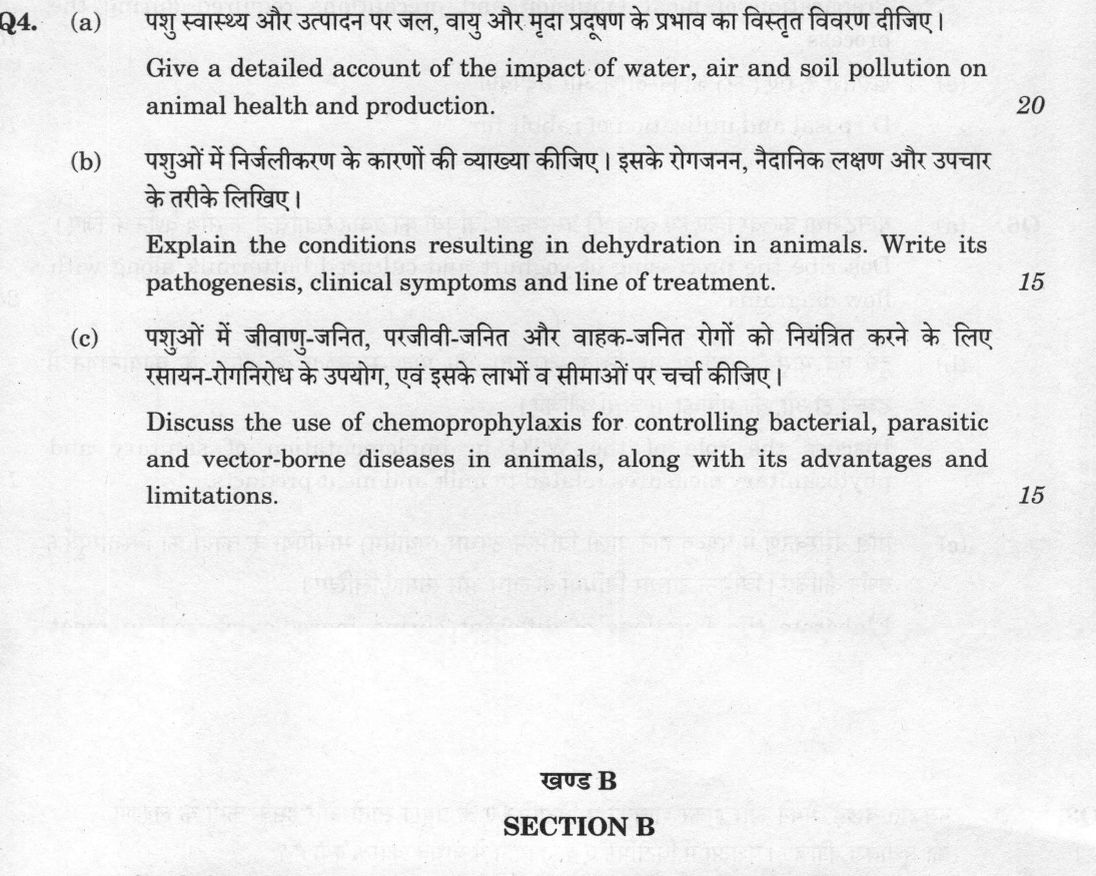
Give a detailed account of the impact of water, air and soil pollution on animal health and production. 20 marks
Explain the conditions resulting in dehydration in animals. Write its pathogenesis, clinical symptoms and line of treatment. 15 marks
Discuss the use of chemoprophylaxis for controlling bacterial, parasitic and vector-borne diseases in animals, along with its advantages and limitations. 15 marks
हिंदी में प्रश्न पढ़ें
पशु स्वास्थ्य और उत्पादन पर जल, वायु और मृदा प्रदूषण के प्रभाव का विस्तृत विवरण दीजिए । (20 अंक)
पशुओं में निर्जलीकरण के कारणों की व्याख्या कीजिए । इसके रोगजनन, नैदानिक लक्षण और उपचार के तरीके लिखिए । (15 अंक)
पशुओं में जीवाणु-जनित, परजीवी-जनित और वाहक-जनित रोगों को नियंत्रित करने के लिए रसायन-रोगनिरोध के उपयोग, एवं इसके लाभों व सीमाओं पर चर्चा कीजिए । (15 अंक)
Model answer
Drafted with AI by UPSC Answer Check against this question's marking rubric, to the expected length. UPSC does not publish answers for Mains — this is one way to score well, not an official key. How we build rubrics and answers.
(a) Impact of water, air and soil pollution on animal health and production (20 marks)
Pollution harms animals through what they drink, breathe and eat, and it also passes residues into milk, meat and eggs, which is a public health problem.
Water pollution: sources are industrial effluent, sewage, runoff of fertilisers and pesticides, mining, and natural contamination.
- Toxic chemicals: heavy metals (lead, cadmium, arsenic, mercury), fluoride (dental and skeletal fluorosis, lameness and reduced production in endemic areas), nitrate and nitrite (methaemoglobinaemia, abortion), pesticides, and high salinity.
- Biological: pathogens (Leptospira, Salmonella, Cryptosporidium, parasites) and cyanobacterial blooms in eutrophic ponds, whose toxins can kill animals within hours.
- Effects: reduced water and feed intake, growth, milk and egg yield and fertility, and acute or chronic poisoning; also loss of fish production.
Air pollution: sources are gases and dust from intensive housing (ammonia, hydrogen sulphide, carbon dioxide, methane, dust), fumes from industry, smelters and brick kilns (sulphur dioxide, fluoride, particulates, lead), smoke and vehicle emissions, and greenhouse gases.
- Effects: irritation and damage to eyes and respiratory tract (bronchitis, pneumonia, keratoconjunctivitis in poultry), reduced immunity, growth and egg production, carbon monoxide or hydrogen sulphide poisoning in closed sheds, and fluorosis near industrial sources, through contaminated pasture. Heat and climate change add heat stress, which lowers milk yield, fertility and immunity.
Soil pollution: sources are industrial and mining waste, sewage sludge, pesticides, fertilisers, plastics and radionuclides.
- Animals are exposed through grazing (they also ingest soil) and contaminated fodder; the toxins pass into milk, meat and eggs.
- Effects: heavy metal poisoning (lead near batteries, cadmium, arsenic), pesticide residues, mineral imbalance such as molybdenum-induced copper deficiency or selenium toxicity, persistence of spores (anthrax) and parasites, and ingestion of plastic causing rumen impaction. Residues of veterinary drugs (diclofenac) in carcasses caused the crash of vulture populations in India.
Prevention: treatment of effluent and waste, enforcement of the Water (1974), Air (1981) and Environment Protection (1986) Acts, monitoring of water, fodder and milk, good ventilation and litter management, safe fodder cultivation, and prompt diagnosis of poisoning.
(b) Conditions causing dehydration in animals; pathogenesis, clinical symptoms and treatment (15 marks)
Dehydration is a deficit of body water, with or without loss of electrolytes.
Conditions (causes):
- Reduced intake: water not available or frozen, and inappetence, painful mouth or throat, and illness in neonates that will not suckle.
- Excess loss: diarrhoea (the commonest cause, especially in calves, lambs and piglets), vomiting, polyuria (kidney disease, diabetes), sweating, panting and heat stress, fever, burns, haemorrhage, and sequestration of fluid in the gut (obstruction, rumen acidosis, peritonitis).
Pathogenesis: water loss exceeds intake, so extracellular and then intracellular fluid volumes fall. The plasma volume drops (hypovolaemia), with haemoconcentration, so venous return and cardiac output fall, tissues are poorly perfused and become hypoxic, and metabolic (lactic) acidosis results. The body responds with thirst, antidiuretic hormone, and the renin-angiotensin-aldosterone system, which retain water and sodium. Severe cases proceed to renal failure, shock and death.
Clinical symptoms: delayed return of a skin fold (skin tenting), sunken eyes, dry, tacky mucous membranes, prolonged capillary refill, weak rapid pulse, cold extremities, depression, weakness, and little urine. Severity by percentage body weight: 5 to 6% mild, 8 to 10% moderate (recumbent calves), and above 10 to 12% severe, near death.
Treatment: correct the cause (antibiotics, antidiarrhoeals) and replace fluid.
- Mild to moderate, with a suckle reflex: oral rehydration solution (glucose, glycine, sodium, potassium and alkalinising agents such as acetate) in frequent feedings.
- Severe or unable to drink: intravenous isotonic fluids (0.9% saline, Ringer's lactate, with dextrose and sodium bicarbonate for acidosis), and hypertonic saline (7%) in small volumes with oral water in emergencies.
- Volume: deficit (% dehydration × body weight in kg = litres) plus maintenance (about 40 to 60 ml/kg/day) plus continuing losses, given over 12 to 24 hours, with monitoring of hydration and urine output.
(c) Chemoprophylaxis for controlling bacterial, parasitic and vector-borne diseases in animals, with advantages and limitations (15 marks)
Chemoprophylaxis is the use of chemicals or drugs in healthy animals, or in animals at risk, to prevent infection or disease, or to limit spread.
Bacterial diseases: metaphylactic antibiotics (oxytetracycline, tulathromycin) to groups arriving at feedlots at risk of respiratory disease; dry cow therapy against mastitis; antibiotic cover for surgery; and post-exposure treatment in some diseases.
Parasitic diseases: strategic deworming (albendazole, ivermectin) timed to the pasture cycle; anticoccidials (amprolium, toltrazuril, monensin) in poultry and young stock; prophylaxis of babesiosis (imidocarb) and theileriosis (buparvaquone); and trypanocide (isometamidium) protection.
Vector-borne diseases: acaricide dipping and spraying (deltamethrin, cypermethrin, amitraz), ear tags and pour-ons against ticks, flies and lice, which lower the transmission of babesiosis, theileriosis, anaplasmosis and trypanosomosis, and monthly ivermectin or milbemycin to prevent canine heartworm.
Advantages: lower morbidity, mortality and losses at times of high risk (transport, weaning, seasonal outbreaks); useful when no vaccine exists (parasites); fast, cheap protection; better productivity, welfare and lower treatment costs.
Limitations: antimicrobial and anthelmintic resistance, and acaricide resistance; residues in milk, meat and eggs (withdrawal periods must be obeyed); toxicity and environmental effects (ivermectin on dung fauna); protection is temporary, so repeated dosing is needed; cost and compliance; it may mask infection; and it is not a substitute for vaccination, hygiene and biosecurity. Use should follow veterinary advice, with limits on antimicrobials as growth promoters.
How this answer will be evaluated
Evaluation rubric
Each sub-part is marked on its own, against the marks and word limit printed on the paper.
- (a) (a) Give a detailed account of the impact of water, air and soil pollution on animal health and production (20). 20 marks
Must cover
- Water: toxic chemicals (heavy metals, fluoride, nitrate, pesticides), pathogens, algal toxins; effects on intake, production and health
- Air: gases and dust from housing, industrial emissions, greenhouse gases and heat stress; respiratory and eye effects
- Soil: heavy metals, pesticide residues, mineral imbalance, persistent pathogens; entry via grazing and fodder
- Residues in milk, meat and eggs; prevention and legal measures
Loses marks
- Describing only one type of pollution.
- Discussing effects on humans or plants.
- No link with animal production.
Earns more
- Named examples (fluorosis, diclofenac and vultures, molybdenosis).
- Impact on production (milk, growth, eggs, fertility).
Extra mark
- Environment Protection Act, 1986 and related Acts
- (b) (b) Explain the conditions resulting in dehydration in animals; write its pathogenesis, clinical symptoms and line of treatment (15). 15 marks
Must cover
- Causes: reduced intake and excess losses (diarrhoea, vomiting, polyuria, sweating, fluid sequestration)
- Pathogenesis: fall in ECF and plasma volume, hypovolaemia, reduced cardiac output, acidosis, compensatory hormones
- Clinical signs: skin tenting, sunken eyes, dry membranes, prolonged capillary refill, weak pulse; degrees by percentage body weight
- Treatment: correct the cause; oral rehydration or intravenous fluids; deficit plus maintenance calculation
Loses marks
- Listing only clinical signs.
- Ignoring fluid calculation.
- Giving hypotonic fluids alone for severe dehydration.
Earns more
- Type of fluid for each degree.
- Monitoring.
Extra mark
- Hypertonic saline in emergencies
- (c) (c) Discuss the use of chemoprophylaxis for controlling bacterial, parasitic and vector-borne diseases in animals, along with its advantages and limitations (15). 15 marks
Must cover
- Definition of chemoprophylaxis and metaphylaxis
- Bacterial (antibiotic prophylaxis), parasitic (deworming, anticoccidials, babesiosis and theileriosis drugs) and vector-borne (acaricides, trypanocides) examples
- Advantages: reduced morbidity and mortality, useful where no vaccine, fast and economic
- Limitations: resistance, residues and withdrawal periods, toxicity, temporary protection, not a substitute for vaccination and biosecurity
Loses marks
- Confusing chemoprophylaxis with vaccination.
- Advantages without limitations.
- Ignoring resistance.
Earns more
- Environmental effects.
- Regulatory limits on antimicrobials.
Extra mark
- Strategic timing of treatments
What "Discuss" is asking you to do
Lay the issue out from more than one side — how it arose, what is claimed for it, what is held against it, and where it now stands. UPSC attaches discuss to broad topics with several live dimensions, so coverage of the dimensions earns more than the strength of your opinion.
Structure that answers it
Set the issue up → the case as it is made → the case against → the dimension both sides leave out → where the balance now lies
Where marks are lost
Listing facts with no thread between them, or arguing one side throughout and calling it a discussion.
Practice this exact question
Write your answer and it is marked point by point against the model answer above — what you covered, what you missed, what you got wrong.
Evaluate my answer →More from Animal Husbandry & Veterinary Science 2026 Paper II
- Q1 Write short notes on/answer the following in about 150 words each : (a) Paranasal sinuses…
- Q2 (a) Enlist the cranial nerves of bovines. Discuss the origin, distribution and functions…
- Q3 (a) Enlist the major sources of Vitamin A and its deficiency symptoms in newborn calves,…
- Q4 (a) Give a detailed account of the impact of water, air and soil pollution on animal heal…
- Q5 Write short notes on/answer the following in about 150 words each : (a) Role of animals a…
- Q6 (a) Describe the processing of yoghurt and cultured buttermilk along with flow diagrams.…
- Q7 (a) Describe the procedure for conducting post-mortem examination of a cow in a vetero-le…