GS Paper IV — Q7
Prabhat was working as Vice President (Marketing) at Sterling Electric Ltd., a reputed multinational company. But presently the…
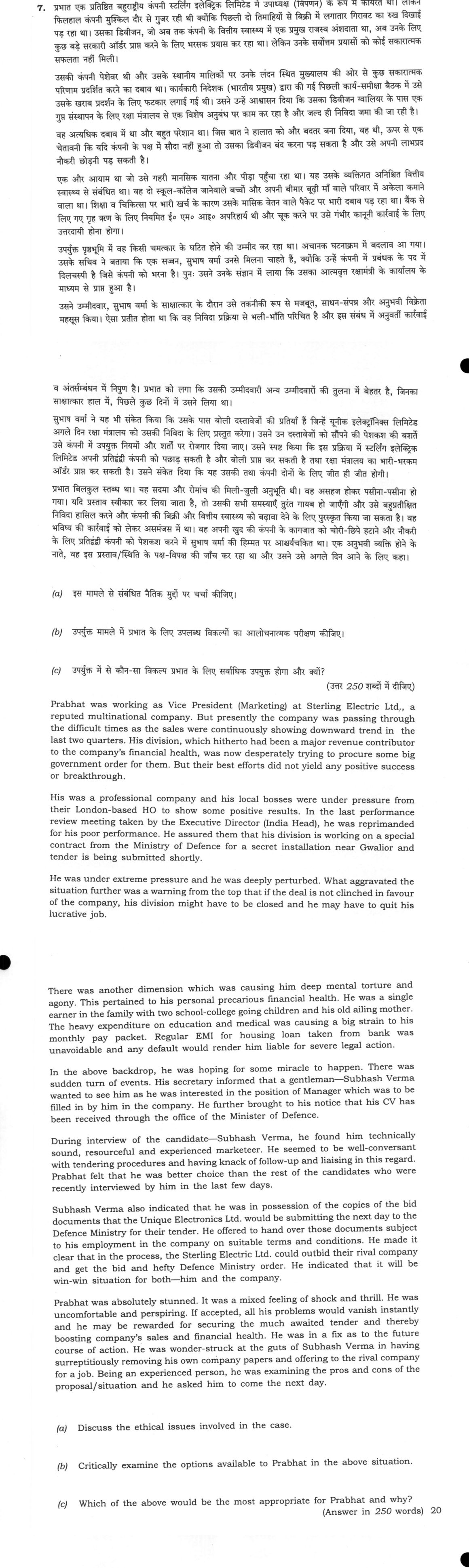
Prabhat was working as Vice President (Marketing) at Sterling Electric Ltd., a reputed multinational company. But presently the company was passing through the difficult times as the sales were continuously showing downward trend in the last two quarters. His division, which hitherto had been a major revenue contributor to the company's financial health, was now desperately trying to procure some big government order for them. But their best efforts did not yield any positive success or breakthrough.
His was a professional company and his local bosses were under pressure from their London-based HO to show some positive results. In the last performance review meeting taken by the Executive Director (India Head), he was reprimanded for his poor performance. He assured them that his division is working on a special contract from the Ministry of Defence for a secret installation near Gwalior and tender is being submitted shortly.
He was under extreme pressure and he was deeply perturbed. What aggravated the situation further was a warning from the top that if the deal is not clinched in favour of the company, his division might have to be closed and he may have to quit his lucrative job.
There was another dimension which was causing him deep mental torture and agony. This pertained to his personal precarious financial health. He was a single earner in the family with two school-college going children and his old ailing mother. The heavy expenditure on education and medical was causing a big strain to his monthly pay packet. Regular EMI for housing loan taken from bank was unavoidable and any default would render him liable for severe legal action.
In the above backdrop, he was hoping for some miracle to happen. There was sudden turn of events. His secretary informed that a gentleman—Subhash Verma wanted to see him as he was interested in the position of Manager which was to be filled in by him in the company. He further brought to his notice that his CV has been received through the office of the Minister of Defence.
During interview of the candidate—Subhash Verma, he found him technically sound, resourceful and experienced marketeer. He seemed to be well-conversant with tendering procedures and having knack of follow-up and liaising in this regard. Prabhat felt that he was better choice than the rest of the candidates who were recently interviewed by him in the last few days.
Subhash Verma also indicated that he was in possession of the copies of the bid documents that the Unique Electronics Ltd. would be submitting the next day to the Defence Ministry for their tender. He offered to hand over those documents subject to his employment in the company on suitable terms and conditions. He made it clear that in the process, the Sterling Electric Ltd. could outbid their rival company and get the bid and hefty Defence Ministry order. He indicated that it will be win-win situation for both—him and the company.
Prabhat was absolutely stunned. It was a mixed feeling of shock and thrill. He was uncomfortable and perspiring. If accepted, all his problems would vanish instantly and he may be rewarded for securing the much awaited tender and thereby boosting company's sales and financial health. He was in a fix as to the future course of action. He was wonder-struck at the guts of Subhash Verma in having surreptitiously removing his own company papers and offering to the rival company for a job. Being an experienced person, he was examining the pros and cons of the proposal/situation and he asked him to come the next day.
Discuss the ethical issues involved in the case.
Critically examine the options available to Prabhat in the above situation.
Which of the above would be the most appropriate for Prabhat and why?
हिंदी में प्रश्न पढ़ें
प्रभात एक प्रतिष्ठित बहुराष्ट्रीय कंपनी स्टर्लिंग इलेक्ट्रिक लिमिटेड में उपाध्यक्ष (विपणन) के रूप में कार्यरत था। लेकिन फिलहाल कंपनी मुश्किल दौर से गुजर रही थी क्योंकि पिछली दो तिमाहियों से बिक्री में लगातार गिरावट का खब दिखाई पड़ रहा था। उसका डिवीजन, जो अब तक कंपनी के वित्तीय स्वास्थ्य में एक प्रमुख राजस्व अंशदाता था, अब उनके लिए कुछ बड़े सरकारी ऑर्डर प्राप्त करने के लिए भरसक प्रयास कर रहा था। लेकिन उनके सर्वोत्तम प्रयासों को कोई सकारात्मक सफलता नहीं मिली।
उसकी कंपनी पेशेवर थी और उसके स्थानीय मालिकों पर उनके लंदन स्थित मुख्यालय की ओर से कुछ सकारात्मक परिणाम प्रदर्शित करने का दबाव था। कार्यकारी निदेशक (भारतीय प्रमुख) द्वारा की गई पिछली कार्य-समीक्षा बैठक में उसे उसके खराब प्रदर्शन के लिए फटकार लगाई गई थी। उसने उन्हें आश्वासन दिया कि उसका डिवीजन क्वालियर के पास एक गुप्त संस्थापन के लिए रक्षा मंत्रालय से एक विशेष अनुबंध पर काम कर रहा है और जल्द ही निविदा जमा की जा रही है।
वह अत्यधिक दबाव में था और बहुत परेशान था। जिस बात ने हालात को और बदतर बना दिया, वह थी, ऊपर से एक चेतावनी कि यदि कंपनी के पक्ष में सौदा नहीं हुआ तो उसका डिवीजन बंद करना पड़ सकता है और उसे अपनी लाभप्रद नौकरी छोड़नी पड़ सकती है।
एक और आयाम था जो उसे गहरी मानसिक यातना और पीड़ा पहुंचा रहा था। यह उसके व्यक्तिगत अनिश्चित वित्तीय स्वास्थ्य से संबंधित था। वह दो स्कूल-कॉलेज जानेवाले बच्चों और अपनी बीमार बुड़ी माँ वाले परिवार में अकेला कमाने वाला था। शिक्षा व चिकित्सा पर भारी खर्च के कारण उसके मासिक वेतन वाले पैकेट पर भारी दबाव पड़ रहा था। बैंक से लिए गए गृह ऋण के लिए नियमित ई० एम० आई० अपरिहार्य थी और चूक करने पर उसे गंभीर कानूनी कार्रवाई के लिए उत्तरदायी होना होगा।
उपर्युक्त पृष्ठभूमि में वह किसी चमत्कार के घटित होने की उम्मीद कर रहा था। अचानक घटनाक्रम में बदलाव आ गया। उसके सचिव ने बताया कि एक सज्जन, सुभाष वर्मा उनसे मिलना चाहते हैं, क्योंकि उन्हें कंपनी में प्रबंधक के पद में दिलचस्पी है जिसे कंपनी को भरना है। पुनः उसने उनके संज्ञान में लाया कि उसका आत्मकृत रक्षामंत्री के कार्यालय के माध्यम से प्राप्त हुआ है।
उसने उम्मीदवार, सुभाष वर्मा के साक्षात्कार के दौरान उसे तकनीकी रूप से मजबूत, साधन-संपन्न और अनुभवी विक्रेता महसूस किया। ऐसा प्रतीत होता था कि वह निविदा प्रक्रिया से भली-भांति परिचित है और इस संबंध में अनुवर्ती कार्रवाई व अंतर्संबंध में निपुण है। प्रभात को लगा कि उसकी उम्मीदवारी अन्य उम्मीदवारों की तुलना में बेहतर है, जिनका साक्षात्कार हाल में, पिछले कुछ दिनों में उसने लिया था।
सुभाष वर्मा ने यह भी संकेत किया कि उसके पास बोली दस्तावेजों की प्रतियां हैं जिन्हें यूनिक इलेक्ट्रॉनिक्स लिमिटेड अगले दिन रक्षा मंत्रालय को उसकी निविदा के लिए प्रस्तुत करेगा। उसने उन दस्तावेजों को सौंपने की पेशकश की बशर्ते उसे कंपनी में उपयुक्त नियमों और शर्तों पर रोजगार दिया जाए। उसने स्पष्ट किया कि इस प्रक्रिया में स्टर्लिंग इलेक्ट्रिक लिमिटेड अपनी प्रतिद्वंद्वी कंपनी को पछाड़ सकती है और बोली प्राप्त कर सकती है तथा रक्षा मंत्रालय का भारी-भरकम ऑर्डर प्राप्त कर सकती है। उसने संकेत दिया कि यह उसकी तथा कंपनी दोनों के लिए जीत ही जीत होगा।
प्रभात बिल्कुल स्तब्ध था। यह सदमा और रोमांच की मिली-जुली अनुभूति थी। वह असहज होकर पसीना-पसीना हो गया। यदि प्रस्ताव स्वीकार कर लिया जाता है, तो उसकी सभी समस्याएं तुरंत गायब हो जाएंगी और उसे बहुप्रतीक्षित निविदा हासिल करने और कंपनी की बिक्री और वित्तीय स्वास्थ्य को बढ़ावा देने के लिए पुरस्कृत किया जा सकता है। वह भविष्य की कार्रवाई को लेकर असमंजस में था। वह अपनी खुद की कंपनी के कागजात को चोरी-छिपे हटाने और नौकरी के लिए प्रतिद्वंद्वी कंपनी को पेशकश करने में सुभाष वर्मा की हिम्मत पर आश्चर्यचकित था। एक अनुभवी व्यक्ति होने के नाते, वह इस प्रस्ताव/स्थिति के पक्ष-विपक्ष की जांच कर रहा था और उसने उसे अगले दिन आने के लिए कहा।
इस मामले से संबंधित नैतिक मुद्दों पर चर्चा कीजिए।
उपर्युक्त मामले में प्रभात के लिए उपलब्ध विकल्पों का आलोचनात्मक परीक्षण कीजिए।
उपर्युक्त में से कौन-सा विकल्प प्रभात के लिए सर्वाधिक उपयुक्त होगा और क्यों?
Model answer
Written by UPSC Answer Check against this question's marking rubric, to the 250-word length. UPSC does not publish answers for Mains — this is one way to score well, not an official key.
Prabhat’s dilemma pits corporate survival and personal distress against duty. Ethically, the case involves conflict between organisational pressure and ethical conduct, corporate espionage versus fair competition, Subhash’s breach of confidentiality, and Prabhat’s fiduciary duty as VP against personal financial desperation. The temptation is ethical egoism and short-term utilitarian gain: one order may save sales, jobs and family, while deontological duty and virtue ethics demand refusing stolen information. A culture that rewards results over process can cause ethical drift, normalising “winning” by illicit means.
Prabhat has options. Outright rejection and reporting to compliance, the ED and, where warranted, the Ministry or Unique Electronics is duty-based and virtuous, protecting stakeholders, but risks losing the tender and his job. Conditional acceptance with internal escalation may seem consequentialist, yet it makes him complicit in corporate espionage, violates confidentiality and fair competition, and invites exposure under IPC, contract law and, if classified, the Official Secrets Act. Stalling tactics delay but do not resolve the moral injury; they preserve ambiguity and may amount to tacit consent. Resignation avoids complicity but abandons fiduciary responsibility and does not stop the misuse of documents. Whistleblowing to authorities is ethically strong but must avoid defamation and protect evidence.
The most appropriate course is immediate rejection, preservation of evidence, internal escalation, and reporting to the Ministry or Unique Electronics, while seeking leave or loan restructuring for personal stress. As in the Satyendra Dubey precedent, integrity must not be exchanged for personal security; lawful alternatives, not illicit advantage, should resolve his dilemma.
What "Critically examine" is asking you to do
Test the proposition the question puts to you and return a finding on how far it holds. Examine stems carry a claim, or ask whether something has happened, and expect evidence weighed both ways before the extent is stated — often with remedial measures attached. “Critically” is not a section added at the end: name the yardstick you are judging by — the evidence, the stated objective, a constitutional principle, a rival explanation — and let a verdict close each part of the body. Where the question quotes a claim, that verdict must land on the claim itself, accepted, qualified or rejected, and not on the theme in general.
Structure that answers it
Restate the claim as the question frames it → evidence that supports it → evidence that undercuts it → the conditions under which it holds → verdict on how far it stands
Where marks are lost
Merits in one paragraph, demerits in the next, and a conclusion calling for a balanced and holistic approach. That is a survey with the judgement left out and it holds the answer in the middle band. The opposite error is reading “critically” as permission to attack — and with the odd pairings, critically describe or critically explain, the exposition still carries most of the marks, the judgement being a layer on it rather than a substitute for it.
How this answer will be evaluated
Approach
Framework: GS4 Case Study Analysis (Ethical Dilemma). (a) discuss: intro > 3-4 dimensions > example > balanced close | (b) examine: intro > how/why with reasoning > evidence > conclusion | (c) justify: claim > 3-4 reasons > evidence > conclusion Full marks: Identifies all ethical dimensions, critically weighs options with legal/financial context, and provides a robust, actionable ethical resolution.
Key points expected
- Conflict of interest (personal vs professional)
- Breach of confidentiality (bid documents)
- Corporate integrity vs survival
- Personal financial pressure as a stressor
- Option 1: Accept (Pros: job, money; Cons: illegal, unethical)
- Option 2: Reject (Pros: integrity; Cons: job loss, financial ruin)
- Option 3: Report (Pros: legal protection; Cons: career risk)
- Option 4: Negotiate/Refuse (Pros: ethical; Cons: pressure)
Evaluation rubric
Each sub-part is marked on its own, against the marks and word limit printed on the paper.
- (a) Identify and analyze the ethical dilemmas and conflicts of interest.
discuss— intro → 3-4 dimensions → example → balanced close
Must cover
- Conflict of interest (personal vs professional)
- Breach of confidentiality (bid documents)
- Corporate integrity vs survival
- Personal financial pressure as a stressor
Loses marks
- Listing values without linking to the case
- Ignoring the legal/contractual dimension
Earns more
- Mention of 'insider trading' or 'corporate espionage'
- Reference to duty of loyalty to employer
- Identification of the 'easy-but-wrong' option
Extra mark
- Reference to specific corporate governance codes
- (b) Critically evaluate the available courses of action with pros and cons.
examine— intro → how/why with reasoning → evidence → conclusion
Must cover
- Option 1: Accept (Pros: job, money; Cons: illegal, unethical)
- Option 2: Reject (Pros: integrity; Cons: job loss, financial ruin)
- Option 3: Report (Pros: legal protection; Cons: career risk)
- Option 4: Negotiate/Refuse (Pros: ethical; Cons: pressure)
Loses marks
- Presenting only one option
- Lack of critical reasoning (just listing)
Earns more
- Analysis of 'win-win' fallacy
- Consideration of long-term career reputation
- Weighing immediate vs long-term consequences
Extra mark
- Reference to whistleblower protection laws
- (c) Select the most appropriate option and justify the decision.
justify— claim → 3-4 reasons → evidence → conclusion
Must cover
- Clear choice of the ethical option
- Justification based on higher principles (integrity)
- Action plan (immediate/short-term)
- Addressing the personal financial crisis ethically
Loses marks
- Preaching instead of reasoning
- Vague conclusion without specific action
Earns more
- Mention of 'public trust' or 'institutional integrity'
- Pragmatic steps to handle personal finances
- Balanced tone (firm but empathetic)
Extra mark
- Specific reference to a code of conduct
Practice this exact question
Write your answer and it is marked point by point against the model answer above — what you covered, what you missed, what you got wrong.
Evaluate my answer →More from General Studies 2022 GS Paper IV
- Q4 (a) What do you understand by the term 'good governance'? How far recent initiatives in t…
- Q5 (a) Russia and Ukraine war has been going on for the last seven months. Different countri…
- Q6 (a) Whistle-blower, who reports corruption and illegal activities, wrongdoing and miscond…
- Q7 Prabhat was working as Vice President (Marketing) at Sterling Electric Ltd., a reputed mu…
- Q8 Ramesh is State Civil Services Officer who got the opportunity of getting posted to the c…
- Q9 The Supreme Court has banned mining in the Aravalli Hills to stop degradation of the fore…
- Q10 You have done MBA from a reputed institution three years back but could not get campus pl…