Paper II — Q4
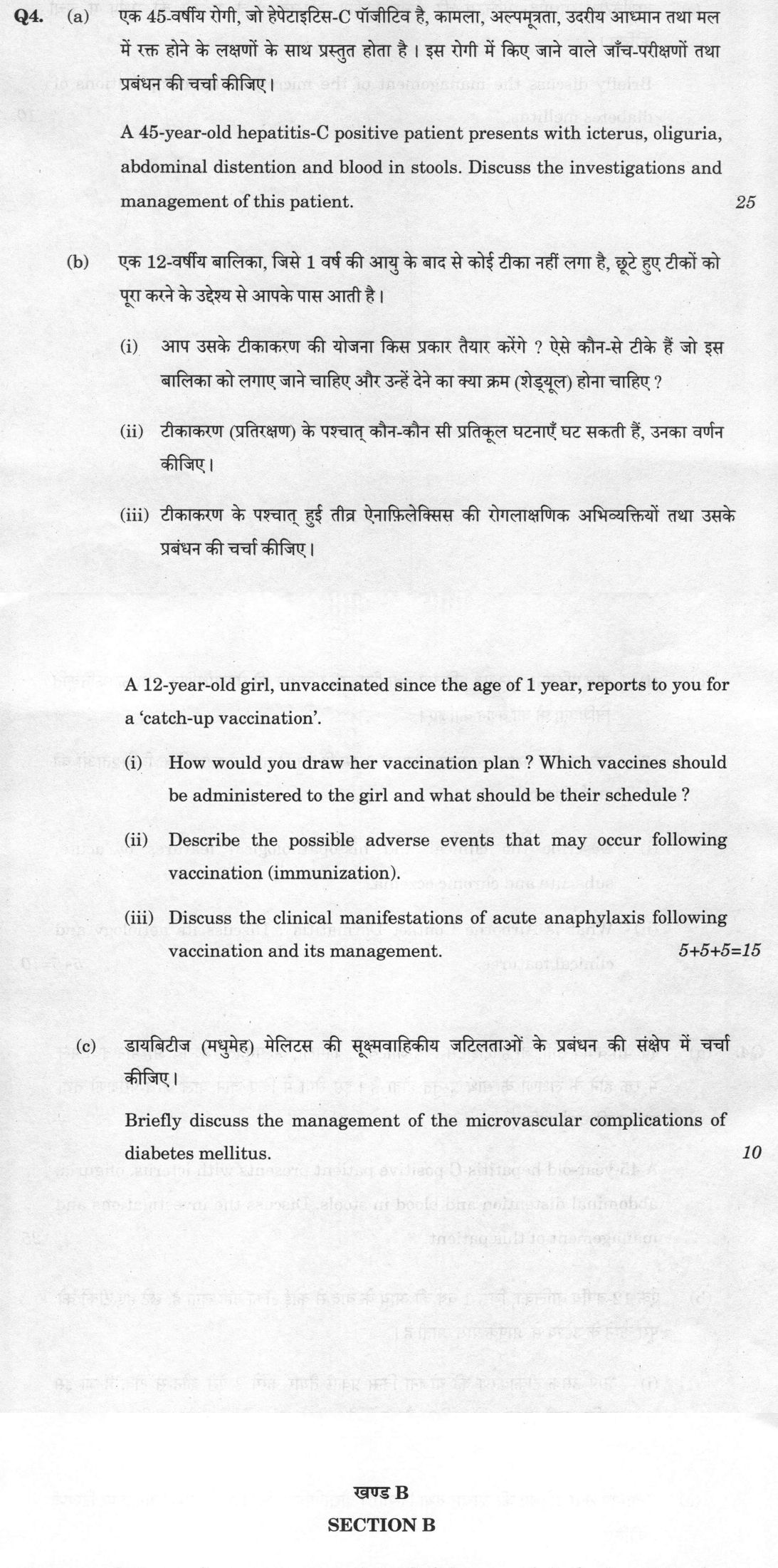
(a) A 45-year-old hepatitis-C positive patient presents with icterus, oliguria, abdominal distention and blood in stools. Discuss…
A 45-year-old hepatitis-C positive patient presents with icterus, oliguria, abdominal distention and blood in stools. Discuss the investigations and management of this patient. 25 marks
A 12-year-old girl, unvaccinated since the age of 1 year, reports to you for a 'catch-up vaccination'.
How would you draw her vaccination plan ? Which vaccines should be administered to the girl and what should be their schedule ?
Describe the possible adverse events that may occur following vaccination (immunization).
Discuss the clinical manifestations of acute anaphylaxis following vaccination and its management. 15 marks
Briefly discuss the management of the microvascular complications of diabetes mellitus. 10 marks
हिंदी में प्रश्न पढ़ें
एक 45-वर्षीय रोगी, जो हेपेटाइटिस-C पॉजीटिव है, कामला, अल्पमूत्रता, उदरीय आध्मान तथा मल में रक्त होने के लक्षणों के साथ प्रस्तुत होता है। इस रोगी में किए जाने वाले जाँच-परीक्षणों तथा प्रबंधन की चर्चा कीजिए। (25 अंक)
एक 12-वर्षीय बालिका, जिसे 1 वर्ष की आयु के बाद से कोई टीका नहीं लगा है, छूटे हुए टीकों को पूरा करने के उद्देश्य से आपके पास आती है।
आप उसके टीकाकरण की योजना किस प्रकार तैयार करेंगे ? ऐसे कौन-से टीके हैं जो इस बालिका को लगाए जाने चाहिए और उन्हें देने का क्या क्रम (शेड्यूल) होना चाहिए ?
टीकाकरण (प्रतिरक्षण) के पश्चात् कौन-कौन सी प्रतिकूल घटनाएँ घट सकती हैं, उनका वर्णन कीजिए।
टीकाकरण के पश्चात् हुई तीव्र एनाफिलेक्सिस की रोगलाक्षणिक अभिव्यक्तियों तथा उसके प्रबंधन की चर्चा कीजिए। (15 अंक)
डायबिटीज (मधुमेह) मेलिटस की सूक्ष्मवाहिकीय जटिलताओं के प्रबंधन की संक्षेप में चर्चा कीजिए। (10 अंक)
Model answer
Drafted with AI by UPSC Answer Check against this question's marking rubric, to the expected length. UPSC does not publish answers for Mains — this is one way to score well, not an official key. How we build rubrics and answers.
(a) A 45-year-old hepatitis-C-positive patient with jaundice, oliguria, abdominal distension and blood in the stools (25 marks)
Working diagnosis. This is decompensated cirrhosis due to hepatitis C with jaundice, ascites, gastrointestinal bleeding (most likely from ruptured oesophageal or gastric varices) and acute kidney injury (oliguria), which is most likely hepatorenal syndrome (HRS-AKI) or pre-renal injury from bleeding or infection. Precipitating causes to look for are variceal haemorrhage, spontaneous bacterial peritonitis (SBP), sepsis, hepatocellular carcinoma with portal vein thrombosis, alcohol, and drugs (NSAIDs, diuretics).
Investigations.
- Bedside first: vital signs, mental state (encephalopathy grade), urine output, and rectal examination to confirm melaena or fresh blood.
- Blood tests: complete blood count (anaemia, thrombocytopenia from hypersplenism), prothrombin time/INR, liver function (bilirubin, AST, ALT, albumin), urea, creatinine, electrolytes (dilutional hyponatraemia), glucose, arterial blood gas and lactate, blood group and cross-match, and blood cultures.
- Aetiology and virology: HCV RNA (viral load) and genotype, anti-HCV, HBsAg and anti-HIV, and alpha-fetoprotein.
- Diagnostic paracentesis (in every patient with ascites): cell count (neutrophils of 250/mm³ or more mean SBP), total protein, albumin (a serum-ascites albumin gradient of 1.1 g/dL or more indicates portal hypertension), and culture inoculated in blood-culture bottles at the bedside.
- Kidney assessment: urine microscopy and protein (to exclude glomerular disease and acute tubular necrosis), urine sodium (below 10 mmol/L in HRS), and kidney ultrasound.
- Imaging: ultrasound of the abdomen with Doppler (a nodular liver, splenomegaly, ascites, portal vein thrombosis, a hepatic mass), with CT or MRI if HCC is suspected; a chest X-ray.
- Upper gastrointestinal endoscopy within 12 hours of resuscitation to find and treat the bleeding source (oesophageal or gastric varices, portal hypertensive gastropathy, ulcer).
- Severity scoring: Child-Pugh and MELD-Na scores (prognosis and transplant listing). The diagnostic criteria for HRS-AKI are cirrhosis with ascites; a rise of serum creatinine of 0.3 mg/dL or more within 48 hours, or 50% or more from baseline; no response after 2 days of diuretic withdrawal and albumin (1 g/kg/day); no shock; no nephrotoxic drugs; and no structural kidney disease (proteinuria below 500 mg/day, fewer than 50 red cells per high-power field, and a normal ultrasound).
Management. The patient should be treated in an intensive care or high-dependency unit.
- Resuscitation and the variceal bleed.
- Airway protection, two large-bore intravenous lines, and cautious volume replacement. Transfuse red cells only to keep haemoglobin at about 7–8 g/dL (a restrictive policy, since over-transfusion raises portal pressure); do not correct the INR routinely with plasma.
- Start a vasoactive drug at once, before endoscopy: terlipressin (2 mg IV, then 1–2 mg every 4–6 hours) or octreotide (50 µg bolus, then 50 µg/hour), for 2–5 days.
- Give prophylactic antibiotics (ceftriaxone 1 g daily for up to 7 days), which reduce infection, rebleeding and mortality.
- Endoscopic therapy: band ligation for oesophageal varices, and cyanoacrylate glue for gastric varices. If bleeding is uncontrolled, use a Sengstaken-Blakemore balloon tube as a bridge to TIPS (transjugular intrahepatic portosystemic shunt); pre-emptive TIPS within 72 hours is considered in high-risk patients (Child-Pugh C, or B with active bleeding).
- Give lactulose to prevent hepatic encephalopathy.
- Ascites and SBP. Restrict sodium (about 2 g/day). Stop diuretics while there is AKI. If SBP is present, give ceftriaxone or cefotaxime (2 g daily for 5–7 days) with intravenous albumin (1.5 g/kg on day 1 and 1 g/kg on day 3) to prevent renal failure. Large-volume paracentesis is done with albumin (8 g per litre removed above 5 litres). Long-term SBP prophylaxis (norfloxacin or ciprofloxacin) after an episode.
- Hepatorenal syndrome. Stop diuretics, NSAIDs, nephrotoxins and beta-blockers, then give albumin 1 g/kg (maximum 100 g) for 2 days. If AKI persists, start a vasoconstrictor with albumin: terlipressin (0.85 mg IV every 6 hours, or a continuous infusion) plus albumin 20–40 g/day, or noradrenaline in the ICU (or midodrine with octreotide when terlipressin is not available). Monitor for pulmonary oedema and ischaemic effects. Renal replacement therapy is a bridge for those who are transplant candidates.
- Hepatic encephalopathy (if present): lactulose (20–30 mL two or three times a day, to 2–3 soft stools) with rifaximin 550 mg twice a day, and treat precipitants (bleeding, infection, sedatives).
- Antiviral treatment (after stabilisation). Direct-acting antivirals, for example sofosbuvir-velpatasvir with ribavirin for 12 weeks (or sofosbuvir-daclatasvir under the National Viral Hepatitis Control Programme), guided by a transplant centre; protease-inhibitor regimens are contraindicated in decompensated disease, and interferon is not used.
- Supportive and long-term: nutrition (35 kcal/kg/day, protein 1.2–1.5 g/kg, a late-evening snack), abstinence from alcohol, avoidance of NSAIDs and sedatives, hepatitis A and B vaccination, screening for HCC every 6 months (ultrasound with AFP), secondary prophylaxis of variceal bleeding (non-selective β-blocker such as carvedilol or propranolol with repeated band ligation every 2–4 weeks until eradication), and referral for liver transplantation evaluation.
(b) A 12-year-old girl unimmunised since 1 year of age, for catch-up vaccination (5 + 5 + 5 = 15 marks)
(b)(i) Vaccination plan (5 marks)
Principles of catch-up. First check the vaccination card and the records, and count every dose already given as valid. Do not restart a series, only complete it. Several vaccines can be given at the same visit at different sites. Live vaccines are given on the same day or at least 4 weeks apart. Minimum intervals between doses must be respected, and there is no upper age limit for the doses listed below. It is assumed here that she completed the primary series in the first year (BCG, OPV, DTP/pentavalent, hepatitis B and measles), and missed the boosters.
Vaccines to give (as per the IAP recommendations).
- Tdap (tetanus, reduced-dose diphtheria and acellular pertussis) one dose, then Td every 10 years. If she has had no primary series, give three doses: Tdap, then Td at 1–2 months and Td at 6–12 months.
- MMR two doses at least 4 weeks apart (if she has not received two doses of a measles-containing vaccine).
- Varicella two doses at least 3 months apart (as she is under 13 years).
- HPV (for girls aged 9–14 years): two doses, 6 months apart.
- Typhoid conjugate vaccine: one dose.
- Hepatitis A two doses, 6 months apart; hepatitis B three doses (0, 1 and 6 months) only if she was not vaccinated.
- IPV (inactivated polio) one dose if there are no polio boosters; annual influenza vaccine; and the Japanese encephalitis, meningococcal or cholera vaccine only in endemic areas or for risk.
A practical schedule. Visit 1 (day 0): Tdap, MMR-1, varicella-1, hepatitis A-1, HPV-1 and typhoid conjugate. Visit 2 (4 weeks): MMR-2 (and the second Td if unvaccinated). Visit 3 (3 months): varicella-2. Visit 4 (6 months): HPV-2 and hepatitis A-2.
(b)(ii) Adverse events following immunisation (5 marks)
An adverse event following immunisation (AEFI) is any untoward medical event after vaccination that does not necessarily have a causal relation to the vaccine. The WHO classifies AEFIs by cause:
- Vaccine product-related reactions: local (pain, redness, swelling, induration, and BCG lymphadenitis or abscess), and systemic (fever, malaise, headache, irritability; the mild measles-like fever and rash 7–12 days after MMR). Severe reactions include anaphylaxis, febrile convulsions, hypotonic-hyporesponsive episodes, persistent inconsolable crying, thrombocytopenia (MMR), Guillain-Barré syndrome, intussusception (rotavirus), vaccine-associated paralytic poliomyelitis (OPV) and disseminated BCG disease in immunodeficiency.
- Vaccine quality defect-related reactions: a defect in the product, such as a faulty manufacturing batch.
- Immunisation error-related reactions (programme errors): a contaminated multi-dose vial causing an infected abscess or toxic shock syndrome, a wrong site or wrong dose, a wrong diluent, or an unsterile injection.
- Immunisation anxiety-related reactions: fainting (vasovagal syncope, common in adolescents) and hyperventilation.
- Coincidental events: an illness that happens to occur after vaccination without a causal relation.
Serious AEFIs must be reported and investigated.
(b)(iii) Anaphylaxis after vaccination (5 marks)
Clinical manifestations. Anaphylaxis is a severe, generalised, immediate hypersensitivity reaction, usually starting within minutes (up to 4 hours) of the injection. It is diagnosed on acute onset of skin or mucosal involvement together with respiratory compromise or hypotension (or involvement of two organ systems).
- Skin and mucosa: generalised flushing, urticaria and angio-oedema of the lips, face and tongue, itching.
- Respiratory: hoarseness, stridor, wheeze, cough and breathlessness, with cyanosis.
- Cardiovascular: tachycardia, hypotension, weak pulse, pallor and collapse (shock).
- Gastrointestinal: abdominal cramps, vomiting and diarrhoea; neurological: anxiety, dizziness and loss of consciousness.
Management. It is a medical emergency, and adrenaline is the first-line drug.
- Call for help, lay the patient flat with the legs raised (sit her up if breathless), and note the time.
- Give adrenaline (1 mg/mL, 1 in 1000) intramuscularly into the mid-outer thigh, 0.01 mg/kg (0.01 mL/kg), at once; for this girl about 0.3–0.5 mL (maximum 0.5 mg). Repeat every 5–15 minutes if there is no response.
- Give high-flow oxygen, and intravenous normal saline (20 mL/kg boluses) for hypotension. Establish an airway if there is upper-airway obstruction.
- Adjuncts (second line and not a substitute for adrenaline): nebulised salbutamol for bronchospasm, an antihistamine (chlorpheniramine or cetirizine) for itching and urticaria, and hydrocortisone.
- Observe for at least 4–6 hours (longer after a severe reaction) for a biphasic reaction, and hospitalise if severe. Report the event as a serious AEFI, and record the vaccine as contraindicated (with allergy referral) for the future. Prevention: observe every recipient for 30 minutes after vaccination, and keep an adrenaline kit ready at every session.
(c) Management of the microvascular complications of diabetes mellitus (10 marks)
Measures common to all. Optimise glycaemic control (an individualised HbA1c goal, usually below 7%), which delays the onset and progression of all microvascular complications (DCCT and UKPDS), control blood pressure to below 130/80 mmHg, a statin for lipids, stopping smoking, weight reduction and exercise, and regular screening: a dilated retinal examination at diagnosis of type 2 diabetes (5 years after diagnosis in type 1, or at puberty) and then every 1–2 years (yearly when there is retinopathy), urine albumin-creatinine ratio and eGFR every year, and a foot examination at every visit.
- Retinopathy. Mild to moderate non-proliferative disease needs only tighter control of glucose, blood pressure and lipids, with follow-up. For severe non-proliferative or proliferative retinopathy, give panretinal laser photocoagulation. For diabetic macular oedema, first-line treatment is intravitreal anti-VEGF injections (ranibizumab, aflibercept or bevacizumab), with focal or grid laser or steroid implants as alternatives. Vitrectomy is used for non-clearing vitreous haemorrhage and tractional retinal detachment. Fenofibrate may slow progression.
- Nephropathy (albuminuria of 30 mg/g or more, or a falling eGFR). Give an ACE inhibitor or an angiotensin receptor blocker at the maximum tolerated dose when there is albuminuria and hypertension, add an SGLT2 inhibitor (empagliflozin or dapagliflozin) to slow the decline in eGFR, and consider finerenone or a GLP-1 receptor agonist. Restrict dietary protein to 0.8 g/kg/day, avoid nephrotoxins (NSAIDs), adjust drug doses (metformin) to the eGFR, and manage anaemia and bone-mineral disorder. Refer to a nephrologist at eGFR below 30 mL/min, and plan dialysis or transplantation for end-stage disease.
- Neuropathy. For painful neuropathy, use pregabalin or gabapentin, duloxetine or amitriptyline, with topical capsaicin or lidocaine. Autonomic neuropathy is treated by symptom: postural hypotension (fluids, fludrocortisone), gastroparesis (small meals, metoclopramide), erectile dysfunction (sildenafil) and bladder dysfunction.
- Diabetic foot. Prevention is the aim: patient education, daily foot inspection, protective footwear, callus care and screening with a 10-g monofilament. An ulcer needs off-loading (a total-contact cast), debridement, culture-guided antibiotics, vascular assessment and revascularisation if needed, and a multidisciplinary foot team to avoid amputation; Charcot foot needs immobilisation.
How this answer will be evaluated
Evaluation rubric
Each sub-part is marked on its own, against the marks and word limit printed on the paper.
- (a) (a) A 45-year-old hepatitis-C-positive patient with icterus, oliguria, abdominal distension and blood in the stools: discuss the investigations and management (25 marks). 25 marks
Must cover
- Diagnosis of decompensated HCV cirrhosis with variceal bleed, ascites and hepatorenal syndrome or AKI
- Investigations: blood count, INR, liver and kidney tests, HCV RNA, diagnostic ascitic tap (PMN 250 and above for SBP, SAAG), ultrasound with Doppler, endoscopy within 12 hours, Child-Pugh and MELD
- Variceal bleed: vasoactive drug, antibiotic prophylaxis, restrictive transfusion, band ligation, TIPS or balloon tamponade
- Ascites, SBP and HRS: albumin, terlipressin, stopping diuretics; lactulose for encephalopathy; DAAs after stabilisation and transplant evaluation
Loses marks
- Giving interferon or protease-inhibitor regimens in decompensated disease.
- Omitting diagnostic paracentesis.
- Correcting INR routinely or transfusing to a high haemoglobin.
Earns more
- HRS-AKI diagnostic criteria stated.
- Doses of terlipressin, octreotide and albumin.
Extra mark
- Screening for HCC and secondary prophylaxis with β-blocker and band ligation
- (b) (b) A 12-year-old girl unimmunised since 1 year, for catch-up vaccination: (i) plan and schedule; (ii) adverse events following immunisation; (iii) clinical features and management of anaphylaxis (5 + 5 + 5 = 15 marks). 15 marks
Must cover
- Catch-up principles: check records, count doses, do not restart, minimum intervals, live vaccines same day or 4 weeks apart
- Vaccines and schedule: Tdap, MMR two doses, varicella two doses, HPV two doses 6 months apart, typhoid conjugate, hepatitis A and B, IPV, influenza
- AEFI classification: vaccine product-related, quality defect, immunisation error, anxiety-related, coincidental, with examples of minor and serious events
- Anaphylaxis: skin, respiratory, circulatory features; adrenaline 0.01 mg/kg IM thigh, oxygen, fluids, adjuncts, observation and reporting
Loses marks
- Restarting the whole series.
- Giving antihistamine or steroid before adrenaline.
- Omitting HPV or Tdap.
Earns more
- Immunisation anxiety and syncope in adolescents named.
- Adrenaline dose and route correct.
Extra mark
- Observation for 30 minutes and an adrenaline kit at every session
- (c) (c) Briefly discuss the management of the microvascular complications of diabetes mellitus (10 marks). 10 marks
Must cover
- Common measures: glycaemic, blood pressure and lipid control, smoking cessation, screening intervals
- Retinopathy: panretinal laser, intravitreal anti-VEGF for macular oedema, vitrectomy
- Nephropathy: ACE inhibitor or ARB, SGLT2 inhibitor, finerenone, GLP-1 agonist, avoidance of nephrotoxins, nephrologist referral
- Neuropathy and foot: pregabalin, duloxetine or amitriptyline, autonomic symptom therapy, foot care, off-loading and antibiotics for ulcers
Loses marks
- Discussing only pathogenesis.
- Omitting the diabetic foot.
- Recommending dual ACE inhibitor and ARB.
Earns more
- Screening schedule (retina, UACR and eGFR, foot).
- Blood pressure target below 130/80.
Extra mark
- Fenofibrate in retinopathy and Charcot foot management
What "Discuss" is asking you to do
Lay the issue out from more than one side — how it arose, what is claimed for it, what is held against it, and where it now stands. UPSC attaches discuss to broad topics with several live dimensions, so coverage of the dimensions earns more than the strength of your opinion.
Structure that answers it
Set the issue up → the case as it is made → the case against → the dimension both sides leave out → where the balance now lies
Where marks are lost
Listing facts with no thread between them, or arguing one side throughout and calling it a discussion.
Practice this exact question
Write your answer and it is marked point by point against the model answer above — what you covered, what you missed, what you got wrong.
Evaluate my answer →More from Medical Science 2026 Paper II
- Q1 (a) Discuss the various sputum-based tests for the diagnosis of tuberculosis under the Na…
- Q2 (a) A 20-year-old medical student presents with fever, dry cough, and right-sided chest p…
- Q3 (a) An 18-year-old girl presents with episodic breathlessness, cough with sputum, chest t…
- Q4 (a) A 45-year-old hepatitis-C positive patient presents with icterus, oliguria, abdominal…
- Q5 (a) Enumerate the causes of lower gastrointestinal bleeding in an adult. Discuss the mana…
- Q6 (a) (i) Describe the causes of occipito-posterior position and different modes of deliver…
- Q7 (a) Describe the various complications of acute pancreatitis. Discuss the role of surgery…