GS Paper III — Q20
Analyse the complexity and intensity of terrorism, its causes, linkages and obnoxious nexus. Also suggest measures required to be…
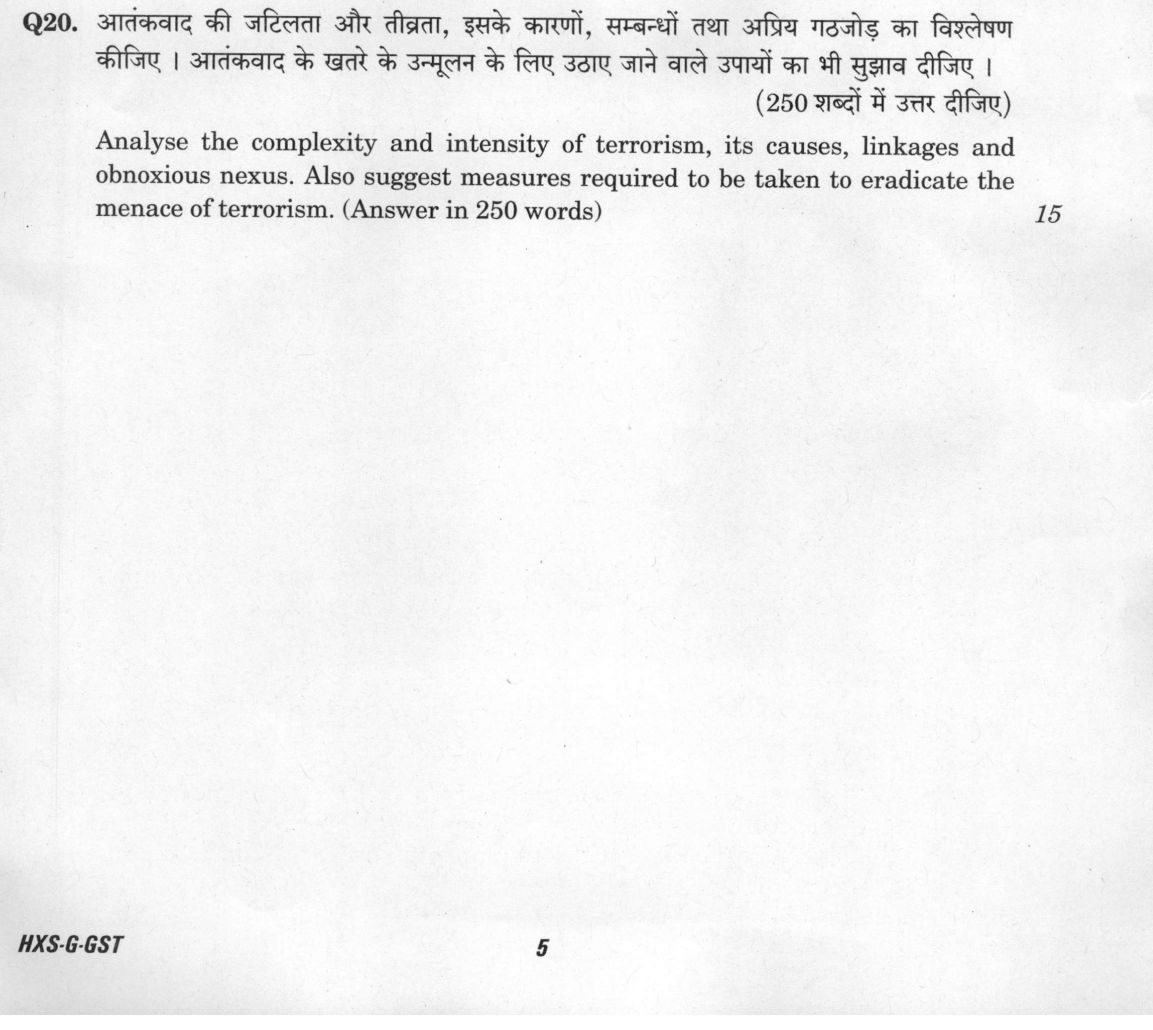
Analyse the complexity and intensity of terrorism, its causes, linkages and obnoxious nexus. Also suggest measures required to be taken to eradicate the menace of terrorism. (Answer in 250 words)
हिंदी में प्रश्न पढ़ें
आतंकवाद की जटिलता और तीव्रता, इसके कारणों, सम्बन्धों तथा अप्रिय गठजोड़ का विश्लेषण कीजिए । आतंकवाद के खतरे के उन्मूलन के लिए उठाए जाने वाले उपायों का भी सुझाव दीजिए । (250 शब्दों में उत्तर दीजिए)
Model answer
Written by UPSC Answer Check against this question's marking rubric, to the 250-word length. UPSC does not publish answers for Mains — this is one way to score well, not an official key.
Terrorism has evolved from localized insurgencies into a hybrid asymmetric threat. Its complexity is reflected in the shift from hierarchical groups to decentralized lone-wolf actors, cyber-terrorism, and state-sponsored proxy warfare. Its intensity is underscored by high casualties, expanding geographic spread, and psychological warfare. India faces this across cross-border terrorism in Jammu and Kashmir (perpetrated by Pakistan-based outfits like LeT and JeM), Left-Wing Extremism (LWE), and Northeast insurgencies.
Causes and the Obnoxious Nexus Root causes encompass political grievances (secessionism), economic underdevelopment and unemployment, socio-religious radicalization, and digital recruitment via social media. These factors feed an obnoxious terror-crime nexus, funding operations through narcotics trafficking, illicit arms trade, and human trafficking. This architecture is reinforced by global ideological diffusion from outfits like ISIS and Al-Qaeda, alongside state sponsorship from adversarial neighbors providing logistical and financial safe havens.
Measures for Eradication Legislative and Institutional: Strengthen intelligence fusion via NATGRID, empower the National Investigation Agency (NIA), and enforce the amended Unlawful Activities (Prevention) Act (UAPA) to disrupt terror financing and detain individual perpetrators.
Developmental: Neutralize structural alienation through targeted economic development, employment generation, and civic action programs, such as applying the SAMADHAN framework and Panchsheel principles in LWE and tribal regions.
Technological and Global: Deploy Artificial Intelligence for dark-web monitoring and financial pattern recognition. At the international level, mandate strict compliance with FATF anti-money laundering norms, enforce UNSC Resolution 1267 sanctions against designated terrorists, and enhance regional intelligence-sharing through BIMSTEC while pushing for the Comprehensive Convention on International Terrorism (CCIT).
Eradicating terrorism demands shifting from reactive containment to a proactive, whole-of-government approach integrating kinetic deterrence, socio-economic rehabilitation, and multilateral diplomatic pressure.
What "Analyse" is asking you to do
Break the subject into its working parts and show how they act on each other. The marks are in the interconnections — which factor drives which, and what the resulting structure explains — not in the inventory of factors.
Structure that answers it
Define the whole → separate it into its parts → show which part drives which → what that interaction produces → what the structure implies
Where marks are lost
A flat list of causes with no account of which drives which. An answer of neatly separated headings, each self-contained, scores as description.
How this answer will be evaluated
Approach
Framework: Security: classify threat, vulnerability, response; stay calm. analyse: intro > causes > effects > stakeholders/linkages > way forward Full marks: Analytical depth on nexus; specific, implementable measures; balanced tone.
Key points expected
- Define complexity/intensity (e.g., non-state actors, WMDs)
- Identify causes (ideological, economic, political)
- Explain obnoxious nexus (narcotics, arms, cyber, state support)
- Suggest implementable measures (legal, institutional, developmental)
Evaluation rubric
Each sub-part is marked on its own, against the marks and word limit printed on the paper.
- The answer Deconstruct the multi-dimensional nature of terrorism and propose a comprehensive eradication strategy. · 250 words
analyse— intro → causes → effects → stakeholders/linkages → way forward
Must cover
- Define complexity/intensity (e.g., non-state actors, WMDs)
- Identify causes (ideological, economic, political)
- Explain obnoxious nexus (narcotics, arms, cyber, state support)
- Suggest implementable measures (legal, institutional, developmental)
Loses marks
- Dramatic or emotional security writing
- Vague, aspirational solutions without implementation details
- Ignoring the 'nexus' aspect of the question
Earns more
- Mention specific international conventions (e.g., UNCTC)
- Reference specific Indian laws (e.g., UAPA, NIA Act)
- Discuss 'soft power' or developmental counter-terrorism
- Mention specific regional bodies (e.g., SAARC, SCO)
Extra mark
- Cite a specific recent incident or data point
- Reference a specific committee report (e.g., Kaul Committee)
Practice this exact question
Write your answer and it is marked point by point against the model answer above — what you covered, what you missed, what you got wrong.
Evaluate my answer →More from General Studies 2021 GS Paper III
- Q17 Describe the major outcomes of the 26th session of the Conference of the Parties (COP) to…
- Q18 Describe the various causes and the effects of landslides. Mention the important componen…
- Q19 Analyse the multidimensional challenges posed by external state and non-state actors, to…
- Q20 Analyse the complexity and intensity of terrorism, its causes, linkages and obnoxious nex…